
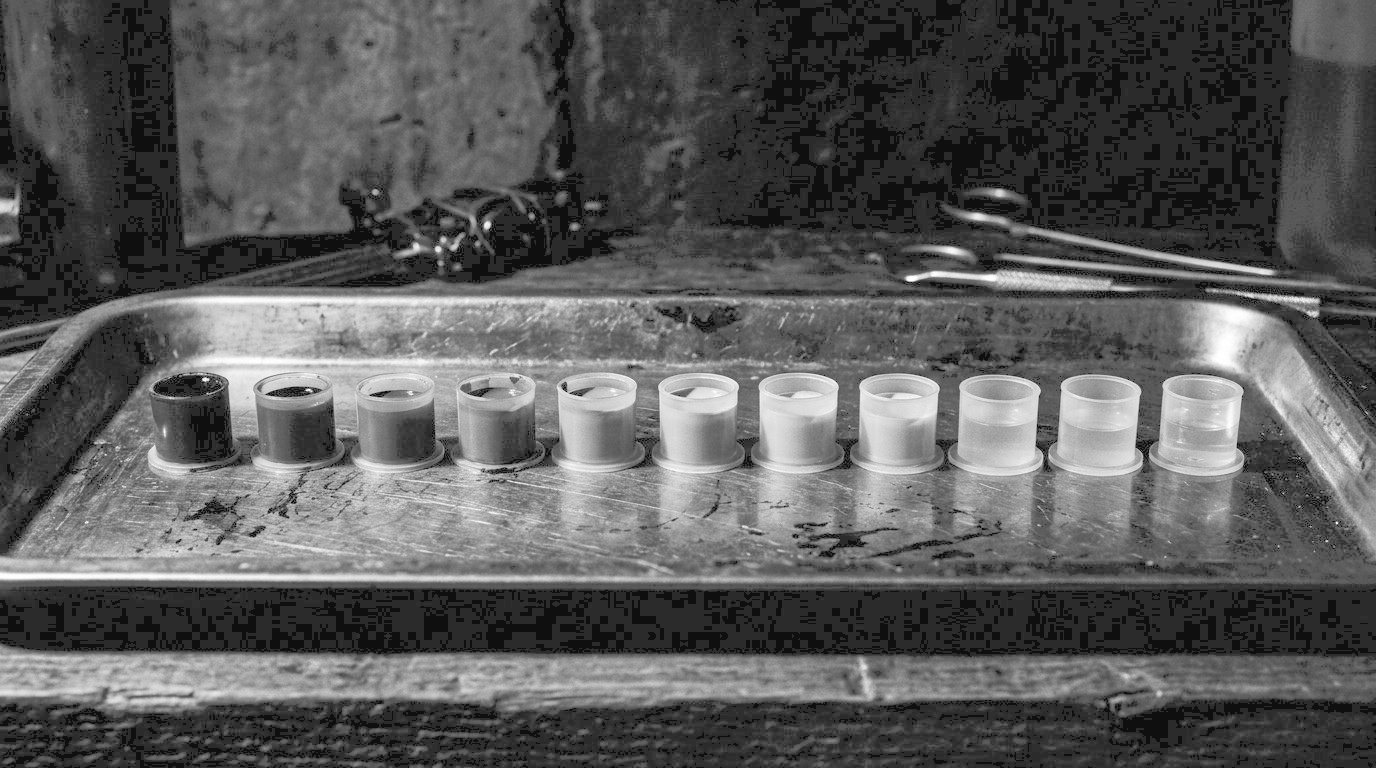
Colour vs Black Tattoos: What Actually Ages Best?
You keep saving tattoos in every style. Bright sleeves. Soft black and grey. White ink details. Then you look at photos of “healed vs fresh” and start to worry about what those colours will look like in ten years.
Maybe friends told you colour tattoos always fade. Maybe someone said black and grey lasts forever. You have seen people argue “colour vs black tattoo aging” on Reddit and still do not feel clear.
You might like the idea of a white colour tattoo on darker skin but have heard it can heal strange. Or you want a small colour piece and wonder if it is worth it if it blurs out fast.
You are not overthinking it. Ink choice changes how your tattoo ages on your skin. It also changes how much maintenance it needs and how readable it looks from a distance.
I work only in black and grey. No colour. No exceptions. So this page is not trying to sell you colour, or to scare you into black. It is here to explain how ink behaves so you can decide if black and grey is right for you.
Why Colour and Black Ink Age Differently
Tattoo ink sits in the middle layer of your skin, the dermis. Over time your body slowly breaks down and moves some of those pigment particles. Sunlight speeds that up.
Black ink uses very dense pigment that your body has a harder time clearing. That is why even very old black lines stay readable, even if they soften.
Colour ink uses different pigments for reds, blues, yellows and so on. Some of those particles are smaller or more reactive, so your body and UV light break them down faster. That is why “colour tattoo fading vs black” is not a myth. You see it most in lighter shades and pastels.
Your skin tone also matters. On deeper skin, light colours can look muted or chalky once healed. On very fair skin, strong colour tattoos can look bright at first but show sun damage fast if you skip sunscreen.
So it is not that colour tattoos are “bad” and black is “good”. They just play by different rules.
Black and Grey Tattoos: Why I Chose Them
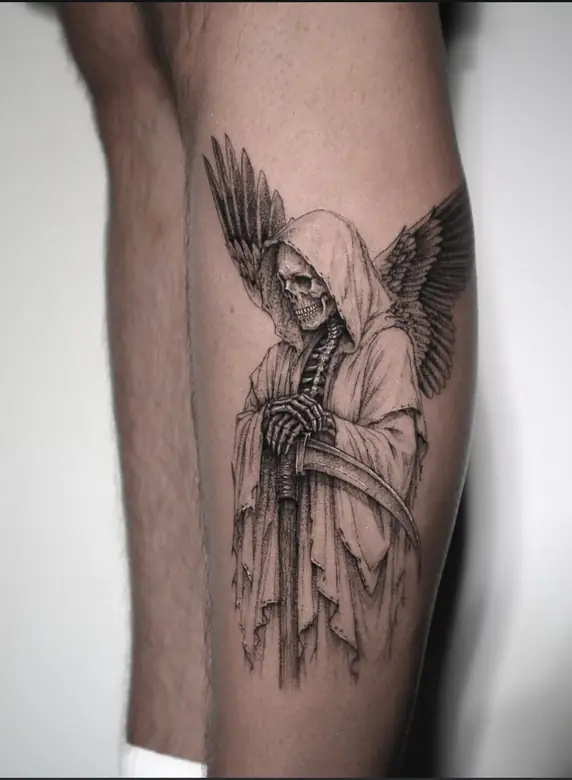
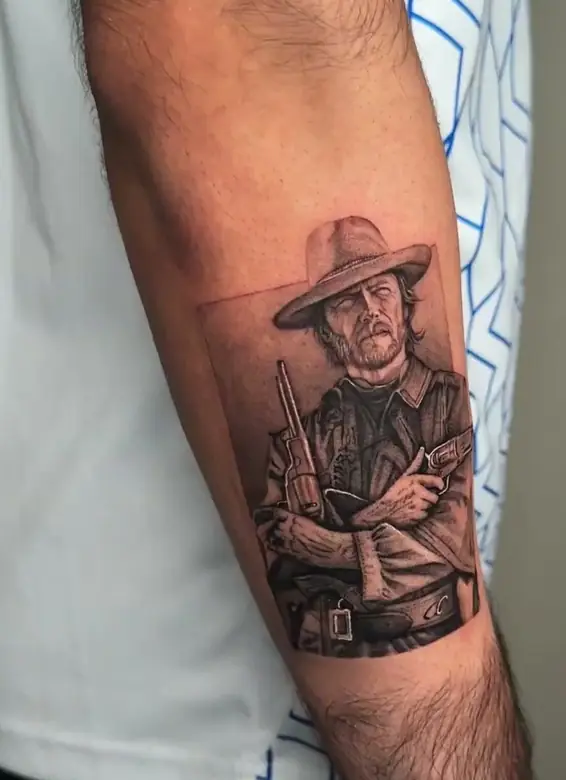
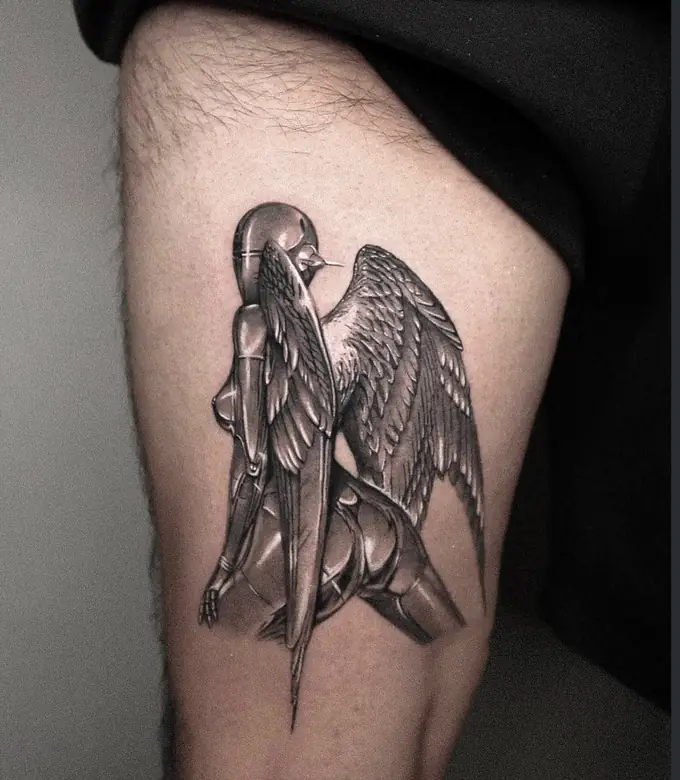
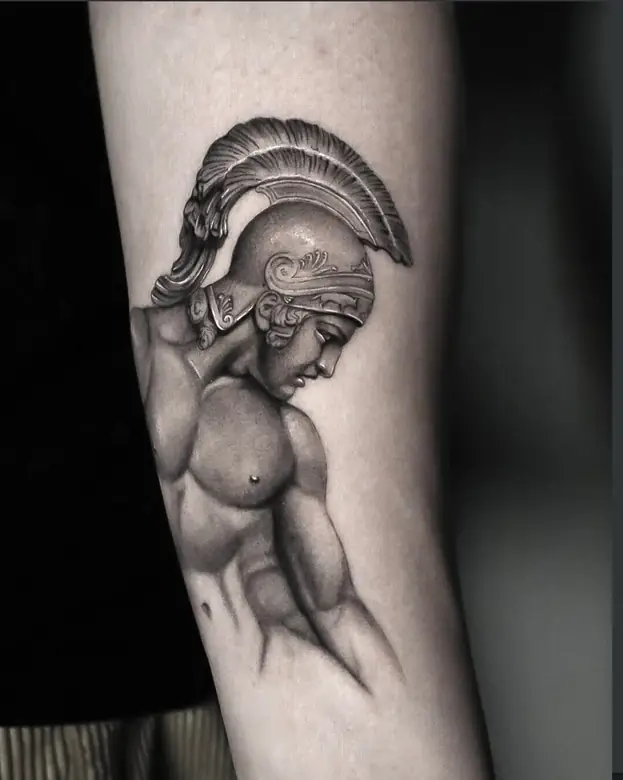
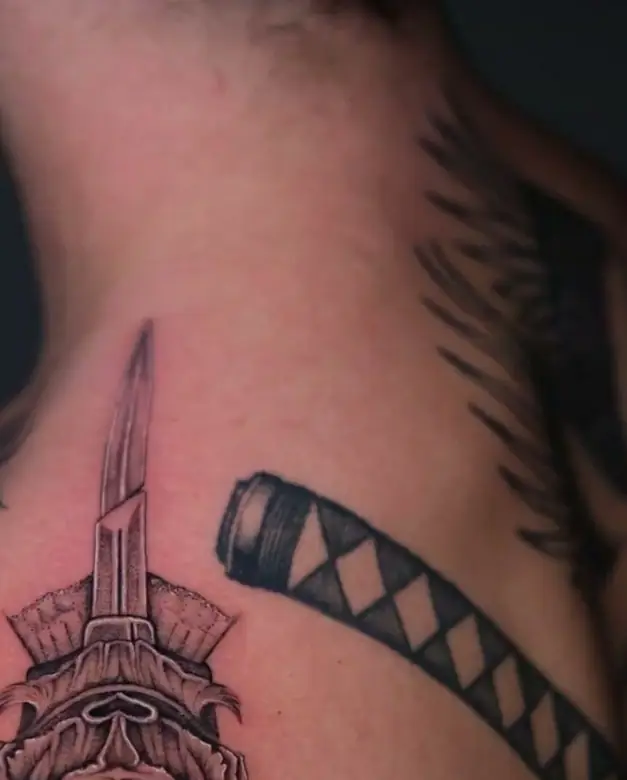
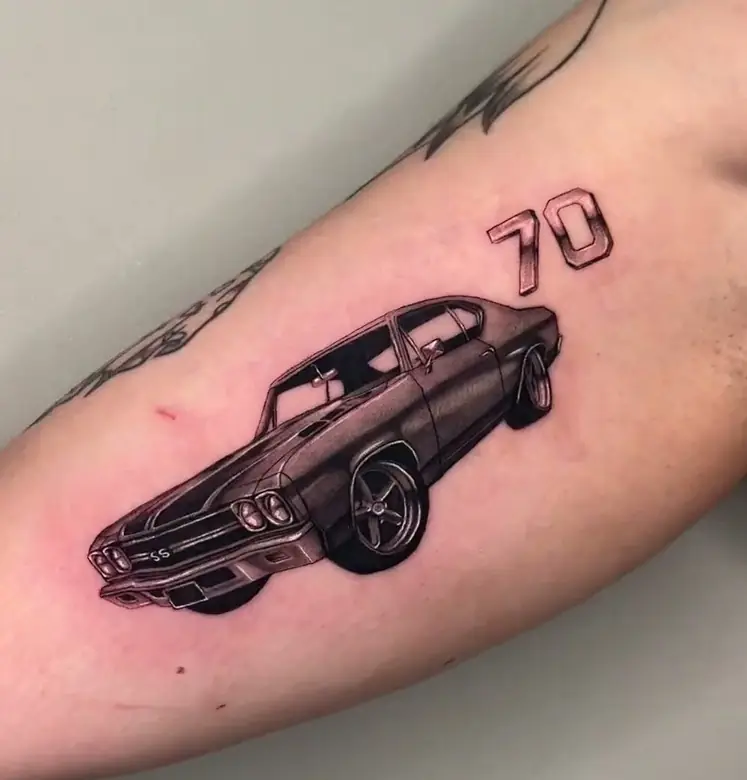
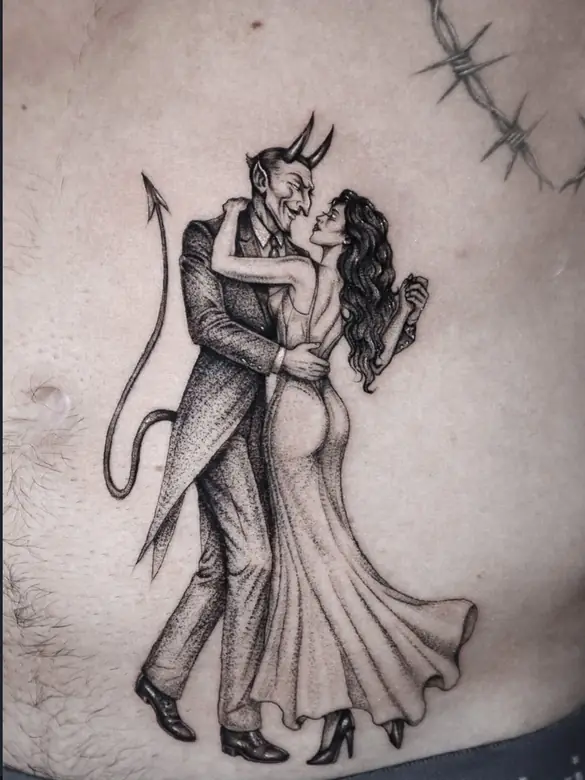
I focus on black and grey realism, fine line and dark / blackwork tattoos. That is a lane I chose on purpose.
Black and grey gives me a big range without relying on colour: high contrast, soft shading, clean detail. I can build depth and mood just through value, from light wash to solid black.
For you, that has a few real advantages:
- Aging: Black and grey holds up clearly for a long time when done with enough contrast. Fine lines soften, but the image stays readable.
- Skin tone: Black ink works on every skin tone. I adjust contrast and line weight so the piece fits your skin and still looks like itself as it heals.
- Touch-ups: When a touch-up is needed, fresh black can bring a piece back to life without having to “guess” complex colour mixes.
If you are torn between black and grey vs colour tattoo options, it helps to ask what you care about most. If your main priority is clear detail and long-term legibility, black and grey is usually the stronger choice.
Where Colour Tattoos Make Sense
I do not offer colour tattoos in my chair. If you are set on bright colour work, I would rather you see an artist who lives in that style every day.
Colour can be great when:
- You want bold traditional or neo traditional tattoos with heavy lines and solid fills
- You like a sticker-book look with separate pieces in different hues
- The design needs specific shades (like flags or certain flowers)
The trade-offs:
- More noticeable fading: Especially in light blues, pinks, yellows and white ink.
- More frequent touch-ups: To keep saturation strong across the whole piece.
- Placement limits: High-sun areas like hands and feet are harsh on colour.
Some people are fine with that. They like the look enough to accept more maintenance. Others notice they mainly like the design and go for a black and grey version instead.
White Colour Tattoos and Very Light Ink
White colour tattoo designs look sharp on social media right after they are done. Healed, they tell a different story.
On most skin tones, white ink heals to a soft off-white or light beige. It can look more like a scar than a clear design, especially on deeper skin.
Other very light pastels can do something similar. They start bright, then settle under the surface as a subtle haze. If you like that barely-there look and understand it will not stay crisp, that can still be a choice.
In my work, I use white ink only as a small highlight in black and grey pieces when needed. I do not build full white colour tattoos, because they do not age the way most people expect in Toronto sun and weather.
How I Plan Black and Grey Tattoos So They Age Well
When I design a piece for you, I am thinking about the healed version and the ten-year version. Not just the day-one photo.
In a consult I look at:
- Skin tone and texture: How much contrast will show on your tone. Any scars or stretch marks to work around.
- Placement: Areas that bend, rub or see more sun will age faster. I place detail where it has the best chance of lasting.
- Size: Fine line realism still needs enough space. Too small and aging turns detail into a blur.
For realism tattoos and fine line work, I use line weight, shading and negative space to keep the design readable. For dark / blackwork pieces, I anchor the design with solid blacks that age in a strong way.
If you bring a colour reference, I translate it into black and grey instead of copying it line for line. That way the piece suits your body and the style I actually do.
Real Expectations: Fading, Touch-Ups and Maintenance
Every tattoo fades some over time. Colour or black. What you do after you leave the chair changes how fast that happens.
Sun is the main enemy. Friction from clothing and constant movement also play a part. Hydrated skin tends to look better than very dry skin.
For my own work, I offer free touch-ups within one month if a small area needs a bit more ink. Anything beyond that is a fresh appointment.
A faded colour tattoo touch up usually means re-saturating whole areas and matching shades. A black and grey touch-up is often simpler: tightening a few lines, deepening shadows, bringing contrast back.
The goal is not a tattoo that never changes. The goal is a piece that still feels like itself as it settles and softens over time.
Why I Do Not Work in Colour (And What That Means For You)
Tattoos are permanent. Your artist’s limits should be clear. I turned down colour pieces because I decided to go deep on one lane instead of doing a bit of everything.
That means:
- If your idea lives or dies on specific colours, I am not your artist for that piece.
- If you bring a colour reference but are open to a black and grey version, I can build something strong from it.
- If you are unsure, we can use a free consult to talk it through before you book.
Being honest here is part of looking after your skin and your money. The work is better when your artist is fully invested in the style they are doing on you.
How I Help You Decide, Step by Step
You do not have to walk into your first session knowing every answer. That is what the consult is for.
At Mitch Bold Tattoos in Toronto, this is how it works:
- Quick consult (10–15 minutes). Video or in person. You show me references, tell me what you like and where you want it.
- Style call. I tell you clearly if black and grey will work for that idea, and how I would approach it.
- Placement and size. We look at your body and talk through how big it needs to be to age well.
- Booking. If you want to go ahead, you leave a deposit and pick a date. No pressure to decide on the spot.
You leave that chat knowing if black and grey is right for this tattoo, or if you need someone who does colour all day. Either way, you are not guessing.
Before / After: What You Can Expect
Every tattoo heals differently. Skin type, placement and how well you follow aftercare all play a part.
In my healed work photos you will see:
- Fresh lines that settle slightly softer
- Shading that stays readable instead of turning muddy
- Black and grey realism that still looks like the subject months later
Results always vary. No artist can promise your skin will hold ink the same way as someone else’s. What I can control is the planning, the application and the honesty about what to expect.
FAQs: Colour vs Black Tattoos
Do colour tattoos fade faster than black tattoos?
Yes, colour tattoos usually fade faster than black tattoos. Lighter pigments like yellow, pink and light blue break down more quickly in sunlight than dense black ink. If you want the clearest long-term lines and detail, black and grey is often the better option. I plan every piece at my Toronto spot with that long-term aging in mind.
Why do artists say black and grey lasts longer?
Black ink has heavier pigment that your body and UV light clear more slowly. That means black and grey tattoos tend to stay readable even as they soften. Colour can still look good with proper care and touch-ups, but it needs more maintenance. My own work focuses on black and grey because it holds detail well over time.
Are white colour tattoos a good idea?
White colour tattoo designs look sharp when fresh, but they almost always heal softer. On many skin tones they end up looking off-white, beige or a little like a scar. If you like that faint look and accept that it will not stay crisp, it can still be a choice. In my work I only use small white highlights, and keep the main design in black and grey.
Are colour tattoos more painful than black tattoos?
The needle feeling is similar for colour and black ink. Colour pieces can feel like more because the artist may go over the same area several times to pack pigment. Black and grey shading often uses softer passes instead of heavy filling. We can talk about pain and placement in your consult so you know what to expect.
Do colour tattoos cost more than black tattoos?
Colour tattoos can cost more when they take longer to pack in solid pigment or blend multiple shades. A large full-colour back piece, for example, is usually more time than a black and grey one. At my Toronto chair I only book black and grey work, with a minimum charge of $200. We can talk through pricing for your specific idea before you book.
How does skin tone affect colour vs black tattoos?
Skin tone changes how both black and colour show up. On deeper skin, light colours and white can heal muted or chalky, while black lines usually read clearly. On very fair skin, both colour and black show well but colour may show sun damage faster without protection. In a consult I look directly at your skin and design around how it holds contrast.
What ages better: black and grey realism or bright colour?
Well-planned black and grey realism often ages better in terms of clarity. Even when fine lines soften, contrast between light and dark keeps the subject visible. Bright colour realism relies on subtle shifts in hue that can blur as pigments fade. Since I only do black and grey realism in Toronto, that is the style I can stand behind as it settles over years.
Can a faded colour tattoo be turned into black and grey?
Sometimes a faded colour tattoo can be reworked into black and grey, but it depends on the design and saturation. Heavy blocks of old colour can limit what is possible without making the area too dark. If you are thinking ahead, starting with black and grey can be a safer base.
Is black and grey better for my first tattoo?
For many people, yes. Black and grey is simple to maintain, works on every skin tone and tends to age clearly. If you are nervous about regret, starting with a strong black and grey piece can feel like a safer move. In Toronto I work with a lot of first-timers and walk you through every step.
How do I decide between colour and black and grey for my idea?
Start with the design, your skin and how you want it to look in ten years. If your idea depends on specific hues, a colour specialist is the right call. If you care most about clear lines, depth and long-term legibility, black and grey at my Toronto spot may suit you better. A free 10–15 minute consult with me is the easiest way to figure it out.
When you are ready to talk through your idea, I am here.